Calgary winters put outdoor surfaces through serious punishment. We are talking temperatures that plunge to -30C, heavy snowfall measured in the dozens of centimetres, and those notorious chinook swings that can flip temperatures by 30 degrees in a single day. If you are thinking about vinyl decking for your home, it is completely reasonable to wonder whether it can hold up through all of that.
The honest answer is yes, and in many ways vinyl decking handles Calgary winters better than any other decking material available. But the performance you get depends heavily on how well the installation was done. A properly installed vinyl deck will outlast wood by decades. A poorly installed one will start showing problems after the first hard freeze.
Here is what you need to know.
Why Vinyl Decking is Engineered for Cold Weather
Waterproof vinyl decking is a PVC membrane system, and PVC is one of the most stable, weather-resistant materials used in construction. It does not absorb moisture, does not swell or contract dramatically with temperature changes, and does not rot, splinter, or warp the way wood does.
The membrane wraps over your existing deck structure and creates a completely sealed surface. Snow and rain sit on top and drain away rather than soaking into the boards below. When a Calgary chinook hits and temperatures swing from -20C to above zero overnight, vinyl handles that transition without cracking or buckling.
Wood decks, by contrast, absorb moisture all winter. That water freezes, expands, and works its way into the grain, widening splits and loosening fasteners over time. Every winter does a little more damage. With vinyl, that cycle simply has no place to start.
Our vinyl decking service covers the full installation process, from surface preparation through to drainage slope calculation and final edge sealing.
The Freeze-Thaw Cycle: Vinyl's Biggest Advantage
The freeze-thaw cycle is the silent destroyer of most outdoor surfaces in Alberta. Water finds a gap, seeps in, freezes overnight, expands, and makes the gap a little larger. Over the course of a few winters, tiny imperfections in wood decking become cracks, and small cracks become structural problems.
A properly installed vinyl deck eliminates this problem at the source. Every seam is heat-welded shut during installation, not just glued or taped. The edges are sealed against posts, walls, and fascia boards. The entire surface is sloped to direct water toward drains and away from the structure underneath.
When there are no entry points for water, the freeze-thaw cycle cannot do its work. This is the core reason why vinyl decking holds up so well in Calgary specifically, where that cycle can repeat dozens of times in a single season.
It is also why installation quality matters so much. Heat-welded seams require proper training and equipment. Edge sealing requires attention to every corner and transition point. Drainage slopes require precise planning before a single piece of membrane goes down. This is the kind of detail that separates a deck that lasts from one that starts failing after year two.
Slip Resistance When It Counts
One question that comes up often is whether vinyl decking gets slippery in winter conditions. On an elevated deck, this is not a small concern.
Quality vinyl deck flooring is manufactured with a textured surface that is specifically engineered for grip in wet and icy conditions. It outperforms smooth wood and painted concrete in winter footing. The texture is part of the membrane itself, so it does not wear away the way anti-slip coatings or paint can.
That said, no outdoor surface is fully immune to black ice. The practical approach is the same as with any outdoor surface: keep snow cleared and allow the deck to drain freely. A properly installed deck with the right drainage slope does a lot of that work for you, moving water away before it has a chance to refreeze overnight.
A good set of aluminum railings alongside your vinyl deck also adds an important layer of safety in icy conditions, giving you something secure to hold onto when the footing gets slippery.
Snow Removal on a Vinyl Deck
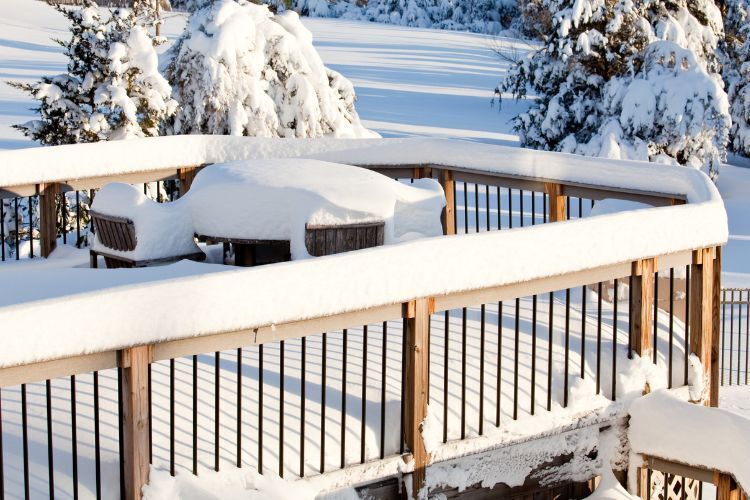
Clearing a vinyl deck after a Calgary snowfall is straightforward. A soft plastic snow shovel works well and will not scratch or damage the membrane. A stiff broom handles lighter snowfall easily. What you want to avoid is metal shovels or sharp-edged tools that can gouge the surface.
Ice melt products are fine to use on vinyl decking. Calcium chloride-based products are the better choice over rock salt, which can be harder on surrounding vegetation and on metal components like railing hardware.
One thing that makes vinyl genuinely different from wood in winter is the lack of stakes involved. Snow sitting on a wood deck is a moisture problem. Snow sitting on a vinyl deck is just snow. Clear it when you want to. The sealed membrane underneath is doing its job regardless of what is on top of it.
What Happens Below the Deck Matters Too
For elevated decks built over living spaces, garages, or storage areas, vinyl decking provides something wood simply cannot: a completely dry space below, even through Calgary's snowiest winters.
A waterproof vinyl surface channels all moisture toward drainage points and away from the structure. The space below stays dry. If you have ever stored anything under a wood deck and dealt with moisture, mildew, or water damage, you understand why this matters.
If your current deck is part of a larger renovation project, it is worth thinking about the full picture. We work on complete deck builds and rebuilds as well as vinyl wrapping over existing structures, and we can help you figure out the approach that makes the most sense for your specific setup.
Tim Allain Has Seen Every Calgary Winter Since 1993
TSA has been installing vinyl decks in Calgary for over 31 years. In that time, Tim has seen how every material and installation method holds up through Alberta winters. The pattern is consistent: the decks that fail do so because of shortcuts taken during installation. Seams that were not heat-welded, edges that were not fully sealed, drainage that was not properly planned.
The decks that hold up are the ones where none of those corners were cut. TSA has never been called back on a warranty claim, and that record comes from doing the detailed work correctly the first time, every time.
Whether you are wrapping an existing deck, starting from scratch, or dealing with a vinyl installation from another contractor that is already showing problems, Tim will give you a straight assessment of what is actually going on and what it will take to fix it properly.
For projects that involve more than just the deck, we also handle basement renovations and other home improvement work throughout Calgary and the surrounding area.
Ready to Stop Fighting Your Deck Every Season?
Vinyl decking is one of the most practical investments a Calgary homeowner can make. It handles freeze-thaw cycles without cracking. It sheds moisture without absorbing it. It requires no sanding, no staining, no sealing, and no seasonal prep work. The surface stays slip-resistant, visually sharp, and structurally sound year after year.
If you are tired of your deck being a maintenance project, or if you are dealing with one that has already taken too many Calgary winters without proper protection, get in touch with TSA for an honest, no-pressure assessment. Tim will take a look, tell you exactly what he sees, and give you a clear recommendation on the best path forward.