If you're planning a new deck or replacing an old one, the wood deck vs. vinyl decking question is probably the first decision you'll face, and in Calgary, it matters more than in most cities. Between chinooks that swing temperatures 20 degrees in an afternoon, dry summer sun, and long winters under snow, your deck material has to handle a climate that's harder on outdoor structures than almost anywhere else in Canada. Both wood and vinyl decking can hold up here, but they get there in very different ways, with different costs and different amounts of your weekend time involved. Here's how the two actually compare.
Why the decision matters more in Calgary
Calgary's freeze-thaw cycles are the real test for any decking material. Wood expands and contracts with moisture, and every winter it goes through repeated freezing and thawing that can loosen fasteners, split boards, and open up gaps where water collects. Vinyl systems respond differently to temperature swings, which is part of why they've become common on flat-roof decks and balconies where waterproofing is non-negotiable. Neither material is automatically "wrong" for this climate — but each comes with a maintenance rhythm that either fits your lifestyle or doesn't.
Wood decks: the classic choice
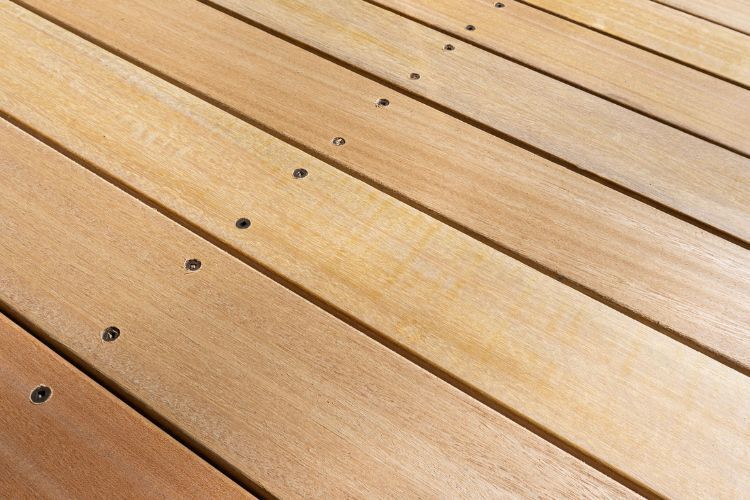
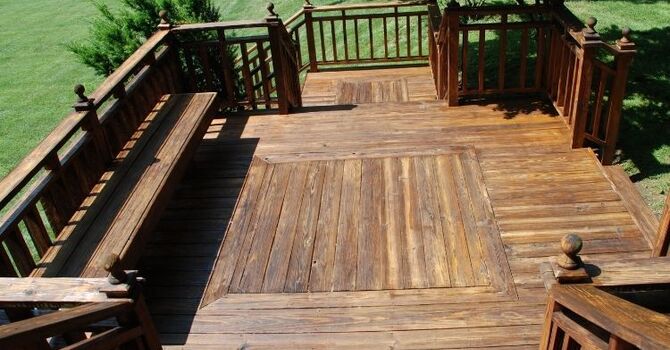
There's a reason a cedar wood deck remains the default choice for a lot of homeowners. Cedar has natural oils that resist rot and insects, it's widely available, and it has a warmth and grain that vinyl simply can't replicate. Pressure-treated lumber is the more budget-friendly option and holds up structurally for decades when it's properly maintained.
The tradeoff is upkeep. So how long does a wood deck last in Calgary? With regular sealing or staining, a well-built cedar or pressure-treated deck can last 15 to 25 years, but that lifespan depends almost entirely on maintenance. Skip a couple of seasons of sealing and you'll see graying, splitting, and eventually soft or rotting boards, especially where snow sits against the ledger board or around post bases.
Deck repairs in Calgary tend to cluster around a few predictable problem areas: loose railings, boards that have cupped or split, and rot where the deck meets the house. Catching these early with an annual inspection is far cheaper than a full rebuild.
Vinyl decking: the low-maintenance contender
Vinyl decking systems take a completely different approach from traditional lumber. Instead of individual boards, a single sheet of vinyl membrane is fully adhered across the deck surface, which makes the whole thing waterproof, not just water-resistant. That's a meaningful difference if your deck sits over a living space, a garage, or a lower patio, since it protects everything underneath from moisture damage.
For homeowners weighing what counts as the best vinyl decking material, the differences mostly come down to membrane thickness, backing type, and surface texture. Quality vinyl decking products are built with UV-resistant coatings and mold inhibitors, and the better systems come with multi-year material warranties that reflect how long the membrane is expected to perform.
Cleaning vinyl decking is about as simple as maintenance gets: a seasonal rinse and occasional soap-and-water scrub is usually enough, with no sanding, staining, or sealing ever required. That's the core appeal of outdoor vinyl decking for busy homeowners, once it's professionally installed, the maintenance calendar mostly disappears.
Cost and long-term value
Upfront, wood is typically the less expensive option per square foot, especially with pressure-treated lumber. Vinyl decking carries a higher installation cost because it's a specialized system requiring trained, authorized installers rather than standard carpentry.
Where the math shifts is over time. A wood deck's long-term cost includes annual or biannual sealing, periodic board replacement, and eventually a full resurfacing. Vinyl's higher upfront cost is offset by essentially zero recoating expense and a membrane that, when properly installed, keeps doing its job without repeat treatments. For a deck you plan to keep for 15+ years, it's worth running both scenarios with actual numbers rather than comparing sticker price alone.
Which is right for your Calgary home
A few questions tend to settle this for most homeowners:
- How much time do you want to spend on deck maintenance each year? If the answer is "as little as possible," vinyl wins.
- Is your deck over a garage, basement suite, or living space below? If water intrusion would be a real problem, the waterproofing case for vinyl gets much stronger.
- Do you want the natural wood look and are you comfortable with the upkeep it requires? Cedar still delivers a look vinyl can't fully match, even with wood-grain vinyl patterns.
- What's your budget window — upfront cost or lowest cost over 15 years? The right answer depends on which number matters more to your household.
There's no universally "better" material here, just a better fit for how you want to use and maintain your outdoor space.
Work with a Calgary contractor who knows both systems
This is where having the right installer matters as much as the material itself. Tim Allain at TSA Home Improvements has built a reputation across Calgary as the contractor other contractors call when a deck or railing job needs to be done right the first time, whether that's a vinyl decking installation, a cedar deck build, or fixing a previous installer's mistakes. TSA Home Improvements works with vinyl decking systems, aluminum railings, custom deck builds, and fencing across Calgary and the surrounding area, and can walk you through which option actually makes sense for your home's layout, sun exposure, and budget.
If you're comparing wood deck vs. vinyl decking for an upcoming project, get a second opinion from someone who installs both. Reach out to TSA Home Improvements for a straightforward, no-pressure quote, and a clear answer on which material will actually hold up on your property.
.jpg)
